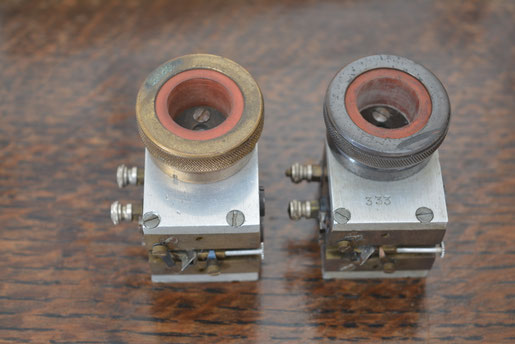
E.M.G DAVEY pickup C. 1932
The E.M.G Company of London had huge success with their Hand made Gramophones during the ALL Mechanical period of Home Audio. They pushed the limits of what was possible & left a legacy by way of a staggering Collection of Audiophile products that are still fought over for possession, in modern day Auction houses. The E.M.G Company has added to the Heritage of British Home Audio, like no other, with their unique, Quirky & perfectly fit for purpose products.
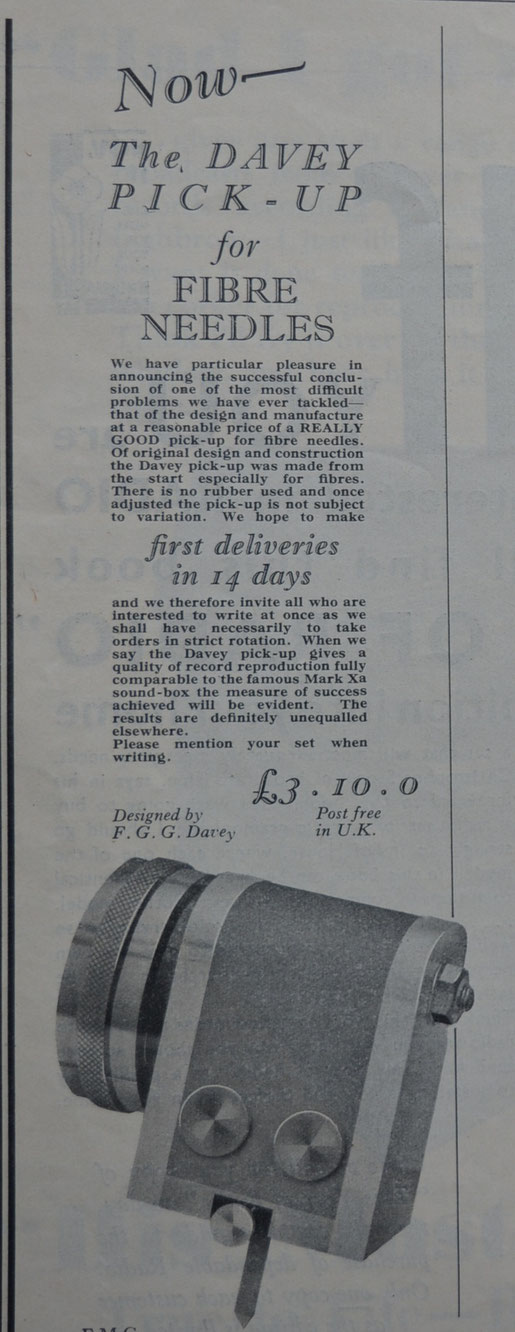
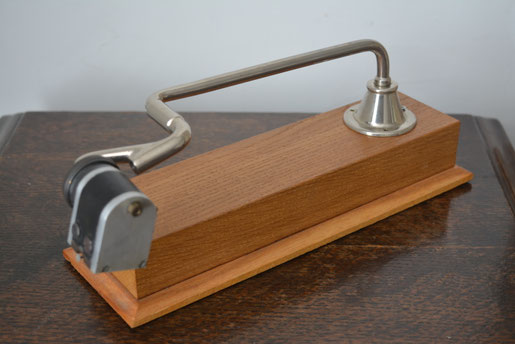
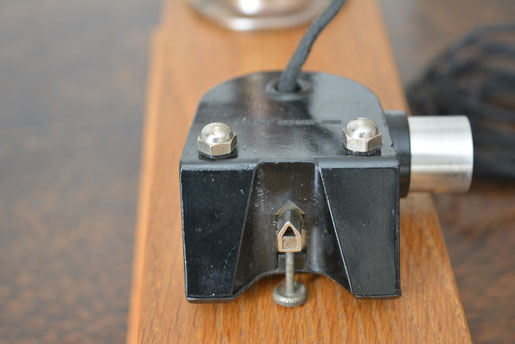
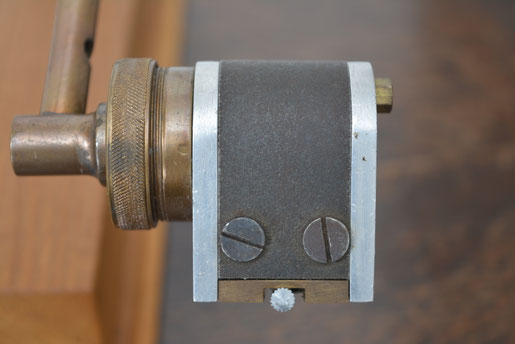
Not to be out-done by the, newly established Electrification of Home Audio, in 1932 The E.M.G Company released 1 of the most Interesting Electro-magnetic Pickups ever made. Following in the tradition of the use of Triangular Bamboo Fibre Needles in comparatively heavy reproducers to play a recording without any wear to the record, E.M.G produced a pickup designed exclusively for Bamboo Fibre's.
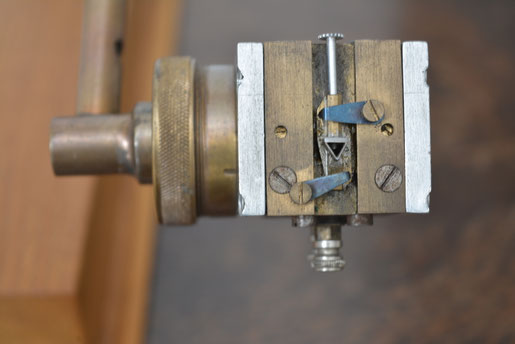
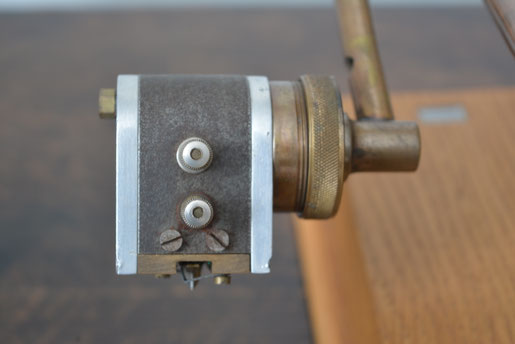
The Gramophone magazine Reviewed this DAVEY pickup, named after it's designer F.G.G Davey very favourably in August 1933. Unlike Contemporary Pickups of this Era that relied on Natural Rubber, the DAVEY pickup relied on thick Grease to damp the pickup action. 2 of E.M.G's "CLAW" type springs as used on their Earlier Mechanical Reproducers were used to give the needle port assembly great sensitivity that can be adjusted almost infinitely. The same "Wright" back, Immortalised by the Meltrope Company of Walthamstow, London, was also used to give a rubber anti vibration sleeve between the pickup body & the arm it was fitted to.
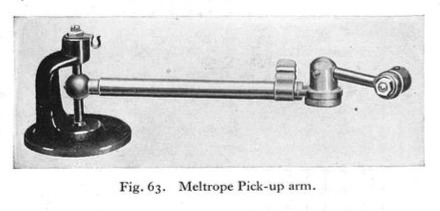
Although the Gramophone magazine Article tested this DAVEY pickup themselves, they chose an Earlier Pickup carrying arm made by the Meltrope Company, rather than the ones made previously by the E.M.G Company in 1929 to set the pickup on a recording. The main reason was that the E.M.G arm lacked lateral adjustment for proper tracking.
Surviving E.M.G DAVEY pickups number around 2 Dozen according to lifelong collectors of the E.M.G products, some of the DAVEY pickups bear a 3 digit Serial Number, Others do not.
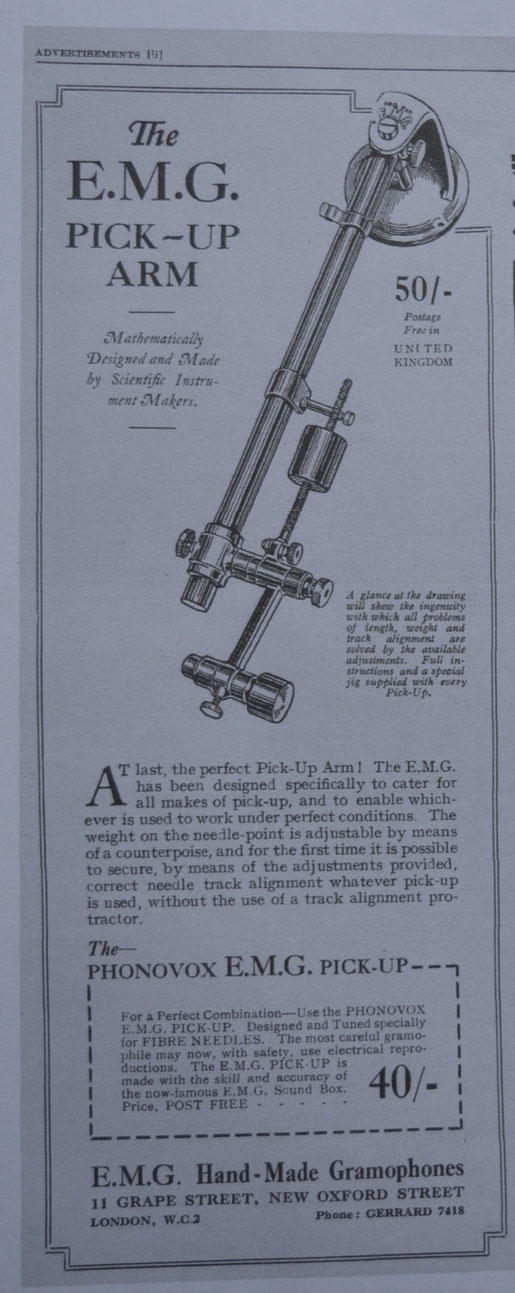
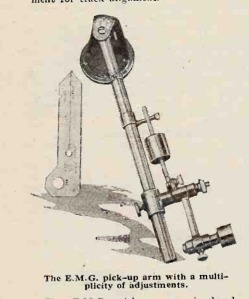
In 1929 E.M.G retailed their own Pickup Carrier arm, which looks like an elaboration on the Meltrope type released a year or two before, but lacking the useful tracking adjustment feature, present on the Meltrope type.
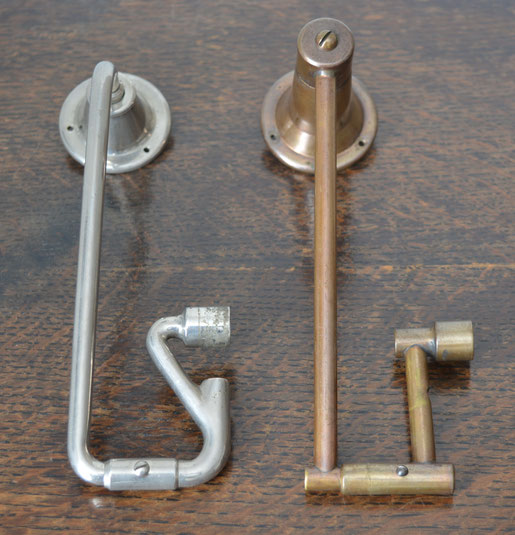
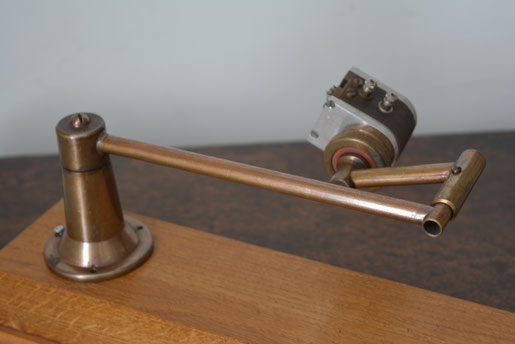
With the release of the DAVEY pickup, E.M.G also produced some simplified Carrier arms that were hollow, to allow the Audio connecting cables to be hidden inside the arms, It's unclear how many different Carrier arm types E.M.G produced as they appeared to be constantly altering their products as many variants & 1 off's exist bearing their name. One E.M.G carrier arm I have examined has "VI" engraved on the underside, so perhaps at least 6 types were built.
The "Phonovox E.M.G" Pickup
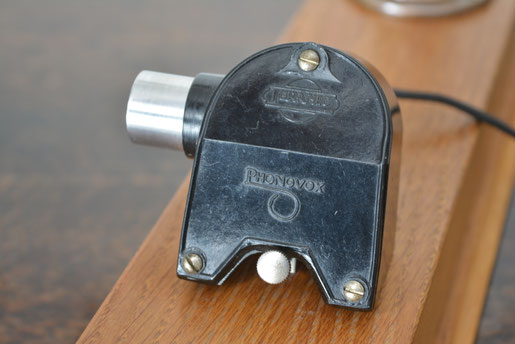
The E.M.G Pickup Carrier arm Advert in Summer 1929 mentions the "Phonovox E.M.G" Pickup. The Advert states that the Igranic Phonovox Pickup, made by the Igranic Electric Co. Ltd. of Queen Victoria Street, London. Is the perfect combination when fitted to the E.M.G Pickup Carrier arm. It's unclear if the "Phonovox E.M.G" pickup was actually marked E.M.G or simply a standard Igranic Pickup sold with the E.M.G Carrier arm at the E.M.G premises.
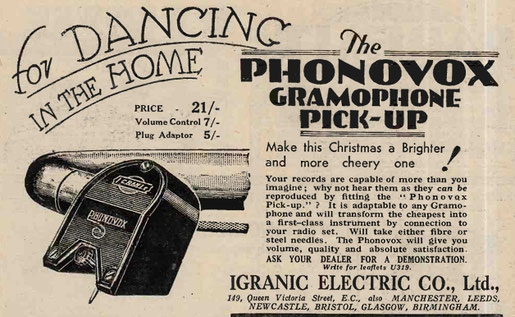
The great advantage that the Igranic Pickup had for the 1930's Audiophiles was the facility for Triangular Bamboo fibre needles, to preserve a cherished record collection. The Igranic also had an internal mechanism of an excellent build quality that used Laminated soft Iron sheets, rivited together (Lamin-iron) for the pickup pole pieces, rather than formed solid that was the inferior & cheaper alternative of the period. Laminated Iron Pole pieces create less "noise" in the Magnetic circuit & results in a superior tonal reproduction. The Igranic Phonovox was released in 1927 as the "Pacent Phonovox", it remained largely un-changed in terms of it's internal construction into the 1930's.