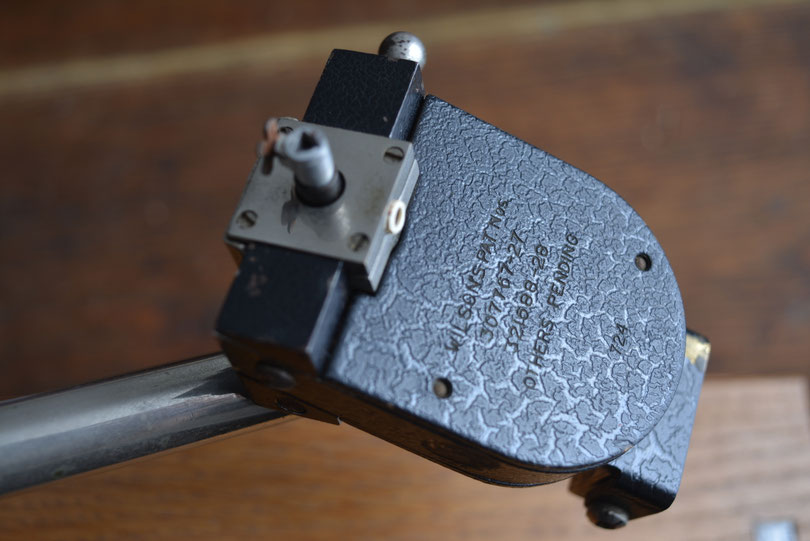
The Meltrope Pickup of 1930
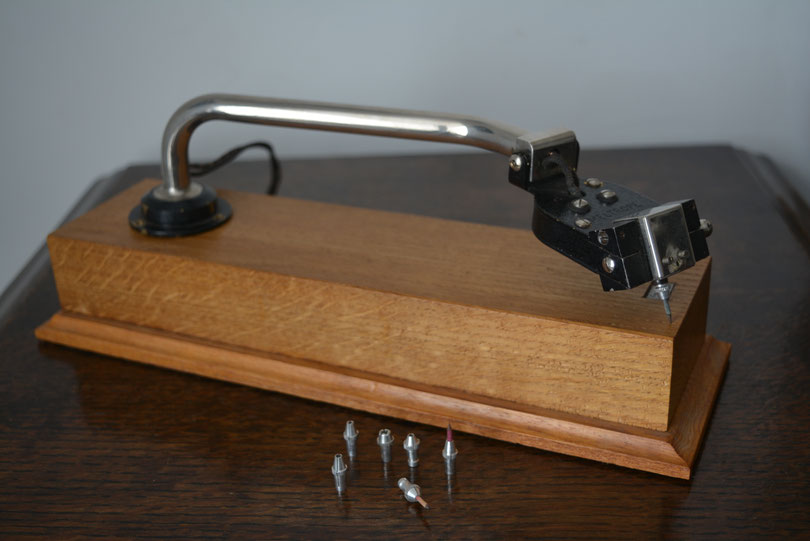

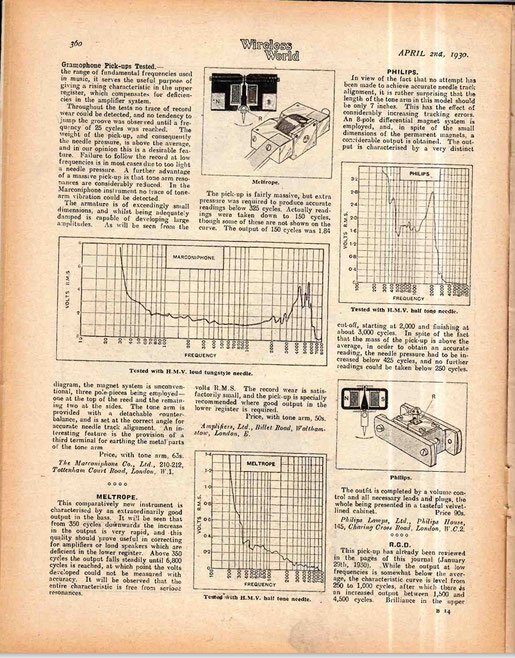
The Meltrope Reproducers of the Mechanical Home Audio Era were some of the best of their class being a substantial volume factory Production, Like many Established Reproducer manufacturers of the Mechanical Audio period, the Meltrope Company (Amplifiers Ltd of Walthamstow, London) ventured into the Arena of Electric Reproduction with a stand alone Pickup supporting arm design that appears in the book "Modern Gramophones & Electric Reproducers" 1929 by Percy Wilson & G.W. Webb, Both of whom were contributors to the major Home audio periodical of the time , "the Gramophone ". It was Percy Wilson who designed a very well conceived Pickup, combined with a tonearm in 1930 that Meltrope produced. This was a Moving Iron, single coil pickup with a horizontally slung Horseshoe form Iron magnet that had the uppermost damping arrangement fitted with copper plated Iron balls between discs of rubber to increase Inductance in the Electro-Magnetic mechanism.
Unlike the majority of Pickups from the period, Instead of a simple needle pinching screw, the Wilson design featured a set of 7 Aluminium Collets for different needle types & diameters. The pickup was deemed Good Enough to be retailed by the E.M.G Company in London as this was during the Period where E.M.G were still concentrating on their own Audiophile Mechanical Reproducers.

A Meltrope pickup with a modified needle port Possibly by Harry Virtz or W.S. Wild.
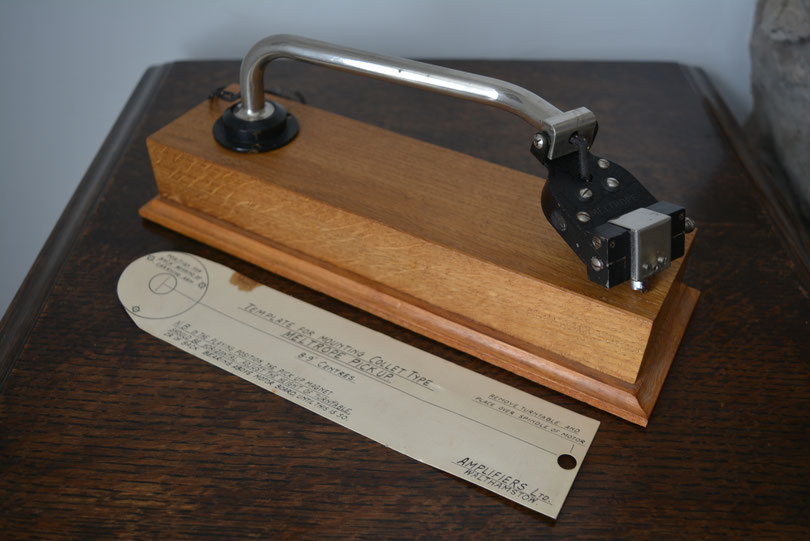
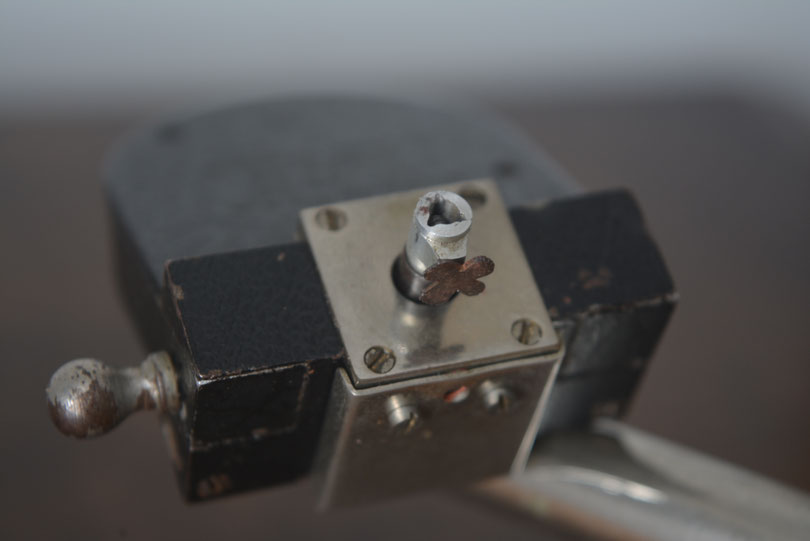
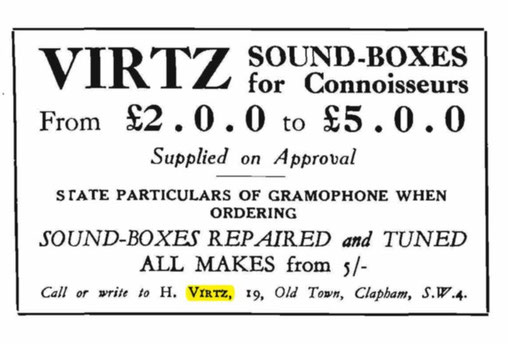
A modified Meltrope Pickup which looks very similar to the Soundbox Modifications produced by Harry Virtz. H. Virtz was a Russian Watchmaker who offered "Tuned" mechanical Reproducers, from his London workshop during the 1920's, often based on the Brass bodied H.M.V factory produced types That Virtz modified with extended Needle bar suspension springs to enable the fine tuning to the frequencies of a certain Instrument on a recording. The altered mechanical reproducers that have survived from Virtz also have a characteristically "filed" Needle pinch screw. A similar filed pinch screw is seen here on this Modified Meltrope Pickup which would point to Virtz being involved in this Meltrope Pickup modification.
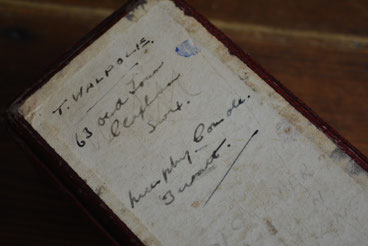
Another interesting point is that Harry Virtz had his Business establishment at No. 19 Old Town, Clapham SW4 London. The carton that this Modified Meltrope pickup was found in bears what could be the Original Owner's Name & Address written on the base in Fountain pen Ink, T. Walpole, 63 Old Town, Clapham SW4. Which is a mere 3 minute walk from Harry Virtz Business Establishment.
Why this modification was Ordered is fairly easy to guess if you have ever tried to find the right sized collet to fit a round shank needle in a Meltrope pickup. It's a very elegant design but not simple to use in practice, especially when changing from 1 needle type to another. The Custom needle port looks to have been turned from Duralium, an early Aerospace grade Aluminium that was used in Airship Frames.
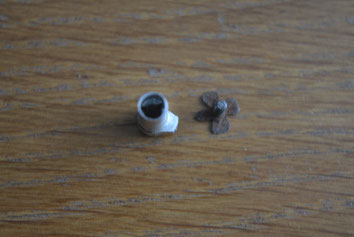
The needle port has an interference fit to the collet holder & is extremely finely executed. The triangular form needle port has a central hole with 3 outer, equidistant satellite holes drilled at 120 degrees & it looks like the outer holes were made to make a visual guide for a small file to chase & create the 3 flat surfaces of the triangular cavity by hand. It would appear to be the work of a Watchmaker.
There was another Well known Mechanical Reproducer "Tuner" during the late 1920's / Early 1930's Period, William. S. Wild who ran a small Ad. in the "Gramophone" & offered "Tuned Meltropes" specifically. Interestingly, W.S Wild was also in the Clapham SW4 Area of London at 181 Manor Street, some 9 minutes walk from the address on the Meltrope Carton. It's unknown if either of these 2 men built the needle port on this Meltrope Pickup but the needle screw design makes Harry Virtz the most likely one of these two in my opinion.